Pike push-ups look simple until you try to keep your hips high, your forearms vertical, and your reps honest. If you can do regular push-ups but your shoulders tap out fast, you are in the right place. In this guide I will show you the clean setup, the form cues that actually matter, and the progressions that build real overhead strength without turning every set into a neck crunch. You will also get a practical weekly plan, quick fixes for common mistakes, and a short FAQ to clear up the usual confusion.
What pike push-ups train (and why they feel so hard)
Pike push-ups are one of the best bodyweight ways to build overhead pressing strength. The more vertical your torso gets, the more your shoulders and triceps have to work, which is also why they are a classic stepping stone toward handstand push-ups.
They feel hard for two reasons: the lever is awkward at first, and good form demands control. When you do them correctly, your head travels forward and down, your forearms stay stacked, and you keep your hips up. That combination is what makes a “few reps” feel like a lot.
Perfect setup and form cues
Setup in 20 seconds
- Start in a push-up position with hands about shoulder width.
- Walk your feet in and lift your hips until you form an upside down V.
- Push the floor away so your upper back is slightly rounded and stable.
- Keep your legs as straight as your hamstrings allow and let your heels be light.
A quick self check: from the side, you want your shoulders slightly in front of your hands, not drifting behind them. That small shift makes the rep feel more like a vertical press instead of a weird push-up.
The rep: where your head goes and what your elbows do
On the way down, aim for a controlled 2 to 3 seconds. Your head should move forward and down so your nose touches the floor in front of your hands, not the top of your head between your palms. Your elbows bend but do not flare wide. Think “elbows point back and slightly out” while your forearms stay vertical.
At the bottom, pause briefly. Then push the floor hard, keep the same hip angle, and finish with your arms straight. If your hips drop during the press, the exercise turns into an easier incline push-up and you lose the shoulder focus.
Common mistakes and quick fixes
| Mistake | What it causes | Fix |
|---|---|---|
| Head goes between the hands | Elbows flare and the rep becomes misleadingly easy | Aim nose to the floor in front of your fingers |
| Elbows flare wide | More stress on shoulders and elbows | Turn hands slightly out and keep forearms stacked |
| Hips sink during the push | Less shoulder load and inconsistent reps | Lock the pike shape and think “hips stay high” |
| Too flat of an angle | Feels like a push-up, not a press | Walk feet closer or elevate feet for a more vertical line |
| Hamstrings limit the position | Rounded lower back and shaky balance | Use a small foot elevation and add short mobility work |
Progressions and regressions that actually work
If you are not strong enough yet: make it easier
If your shoulders fail before your technique is consistent, regress the movement instead of grinding ugly reps. In practice, you want a version where you can keep the head path and forearm stack every time.
- Hands elevated pike push-up (hands on a box or step): reduces range of motion while keeping the pattern.
- Short range pike push-up: lower only as far as you can keep elbows and head path clean.
- Incline push-up plus: focus on pushing the floor away at the top to build shoulder blade control.
Standard pike push-up: make every rep count
Your goal here is repeatable, honest reps. I prefer a slow lower, a tiny pause, and a strong press up. This makes progress measurable and protects your elbows because you are not bouncing into the bottom.
When it gets easy: progress intelligently
Once you can hit clean sets, increase difficulty by changing the angle or the range of motion, not by rushing your tempo.
- Decline pike push-up: elevate your feet to increase load and depth.
- Feet closer to hands: makes the press more vertical and shoulder dominant.
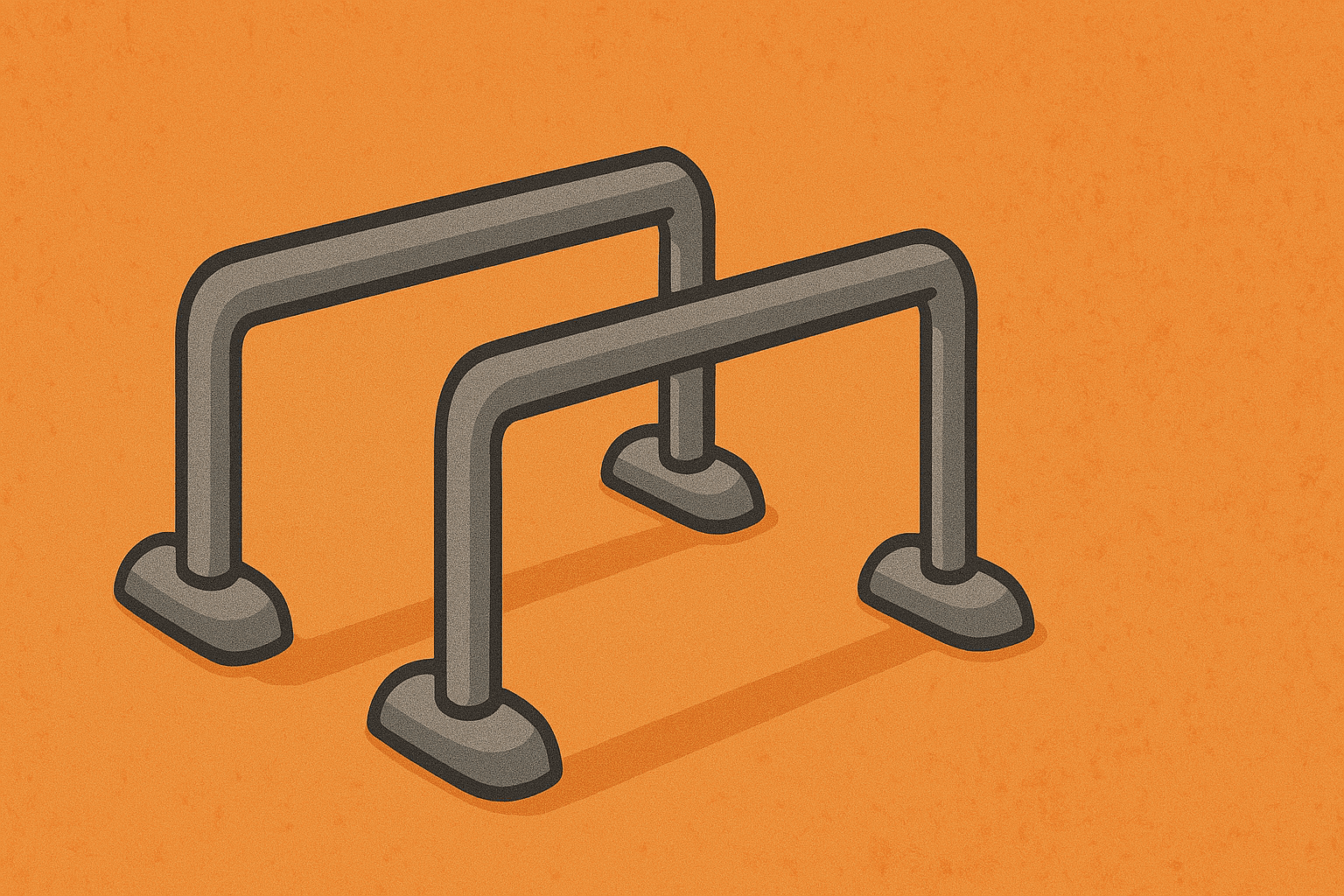
- Deficit pike push-up using push-up bars or parallettes: deeper range without smashing your head into the floor.
- Narrower hands (slightly): more demanding, but only if wrists and elbows feel good.
A simple weekly plan to train pike push-ups
Two sessions per week (beginner to intermediate)
This is the format I give most people because it is enough stimulus without beating up the shoulders. Keep 1 to 2 reps in reserve on most sets. Stop a set the moment your head starts diving between your hands.
- Warm up 5 to 8 minutes: shoulder circles, scapular push-ups, and 1 to 2 easy pike holds.
- Main work: 4 to 6 sets of 4 to 8 reps of your current pike variation, using a 2 to 3 second lower.
- Back off sets: 2 sets of an easier variation for 8 to 12 smooth reps.
- Optional accessory: 2 sets of plank or hollow hold for 20 to 40 seconds.
Progress rules (so you do not get stuck)
- Add reps until you can do 3 to 4 sets at the top of your rep range with clean form.
- Then increase difficulty slightly, for example a higher foot elevation or a small deficit.
- Keep the same landmarks each session, like where your hands and feet go, so you can compare honestly.
- If form breaks, reduce range of motion or switch back to an easier variation for that day.
Mobility and warm up that makes pike push-ups smoother
Quick mobility (3 minutes)
If your hamstrings are tight, your pike position collapses and your shoulders take a weird path. You do not need a long stretching routine. Do a short sequence before training and you will feel the difference.
- Downward dog pulses: 10 slow pulses, pushing chest toward thighs.
- Elephant walk: 10 to 15 alternating heel drops, knees slightly bent.
- Pike hold: 20 to 30 seconds focusing on hips high and stable.
Equipment tips (only if it solves a real problem)
You can train pike push-ups with zero equipment, but two tools are genuinely useful in real life.
If wrist extension bothers you, a pair of Gornation Parallettes can make pressing more comfortable and also enables a clean deficit for deeper reps. If your hands slip or you train outside, a small amount of chalk can improve consistency. For a broader overview of helpful items, see this guide to calisthenics accessories.
Veelgestelde vragen
How to train pike push-ups if I can do push-ups but my shoulders are weak?
Use a regression that keeps the same pattern. Start with hands elevated pike push-ups and do slow lowers with a short pause. Train them twice per week, aiming for 4 to 6 sets of 4 to 8 clean reps. If your head path or elbows break down, make it easier rather than forcing reps.
Where should my head touch the floor in a pike push-up?
Aim for your nose to touch the floor slightly in front of your hands. If your head drops between your palms, you usually flare your elbows and lose the vertical pressing angle. Think “forward and down” and keep your forearms stacked over your wrists for a safer, stronger rep.
Should I elevate my feet for pike push-ups?
Feet elevation is a great progression, but only after you own strict reps on the floor. Elevating your feet increases load and range of motion, which is perfect for building stronger shoulders. Start with a low step and keep the same tempo. If you cannot keep hips high, lower the elevation.
How many reps of pike push-ups should I aim for before progressing?
I like a simple benchmark: when you can do 3 to 4 sets of 8 reps with consistent depth, forearms vertical, and no hip sag, you are ready to progress. Then increase difficulty in one variable only, such as feet slightly higher or a small deficit, and rebuild your reps.
Are pike push-ups a good progression to handstand push-ups?
Yes, as long as you train them like a vertical press. The more you bring your feet closer and elevate them, the more the movement resembles the handstand push-up pattern. Combine strict pike push-ups with brief pike holds and controlled eccentrics. That gives you strength and control without rushing to the wall.
If you want to know how to train pike push-ups, focus on two things: clean mechanics and smart progressions. Keep your hips high, send your head forward and down, and stack your forearms so every rep looks the same. Start with a version you can control, train it twice per week, and only make it harder when your reps are consistent. Do that, and your shoulders will finally catch up to your push-up strength in a way that actually carries over to harder overhead skills.