Push-ups look simple, but training them well is a skill. If you’ve ever felt stuck at the same number of reps, had wrist discomfort, or watched your hips sag halfway through a set, you’re not alone. In this guide, I’ll show you a practical push-up progression that works for beginners and intermediates. We’ll cover the quickest way to pick the right variation, how to use clean technique to build strength faster, and how to structure your week so you improve without burning out. You’ll also get my honest take on when equipment actually helps and when it’s just noise.
What actually makes push-ups improve
Consistency beats “perfect” programs
If you want a reliable answer to how to train push-ups, it’s this: practice the pattern often enough to improve, but not so much that your form falls apart every session. Most people fail push-ups because they train them like a test. They do one all out set, feel destroyed, then avoid them for a week.
I prefer treating push-ups like a skill plus strength. You repeat high quality reps, leave a little in the tank, and progress the difficulty slowly. That approach is boring in the best way because it works.
Progressive overload without guesswork
Progressive overload just means your body needs a slightly bigger challenge over time. With push-ups, you can overload in a few simple ways:
- Add reps while keeping form strict
- Add sets if you can recover well
- Lower the elevation so you lift more of your bodyweight
- Slow the lowering to build strength where you’re weak
- Move to a harder variation like narrow hands or feet elevated
Pick one lever at a time. If you change everything at once, you won’t know what helped and you’ll usually just accumulate fatigue.
Choose the right starting level (the fastest way to get your first clean reps)
The 8 to 10 rep rule
Start with a variation you can do for 8 to 10 clean reps for 3 sets, with about 1 to 2 reps left in reserve. If you can’t hit 8 reps without your hips sagging or elbows flaring, the variation is too hard for training. Save that harder version for negatives later.
A simple progression ladder (from easiest to hardest)
Use the idea of gradually moving “down” toward the floor. The lower your hands are, the more of your bodyweight you press.
- Wall push-up (hands at chest height)
- Countertop or sturdy table push-up
- Knee high elevation push-up (bench or box)
- Knee push-up (straight line from shoulders to knees)
- Floor push-up
My honest opinion: elevated push-ups are underrated. People rush to knee push-ups because they feel “more real,” but elevation often keeps a better body line and lets you practice the exact push-up pattern with less strain.
When to move to the next level
Progress when you can do 3 sets of 10 to 12 reps with consistent depth and tempo, and your last rep still looks like a push-up, not a survival move. Then lower the elevation or switch to the next step for your training sets.
Push-up form that builds strength instead of bad habits
Set up your “strong line”
Good push-ups are basically a moving plank. Before the first rep:
- Hands under shoulders, fingers spread
- Body in one line, glutes tight, ribs down
- Look at the floor a bit in front of your hands so your neck stays neutral
- Think “push the floor away” on the way up
If your push-ups feel unstable, fix your line before you chase more reps. Clean reps teach your body the right pattern. Sloppy reps teach compensation.
Elbow angle: the biggest technique win for most people
Keep your elbows relatively close to your body instead of flaring out wide. From above, your body should look more like an arrow than a T shape. This usually feels better on the shoulders and makes strength carry over to harder variations.
Range of motion and tempo
Use a pain free range of motion where your chest gets close to the floor or touches the target if you’re doing elevated reps. I like a controlled lowering of about 2 seconds. A slower eccentric builds strength fast, and it exposes weak points honestly.
Four common mistakes to fix immediately
- Hips sagging: scale the variation down and tighten glutes and abs
- Head reaching forward: keep your neck in line with your spine
- Half reps: reduce difficulty until you can own full depth
- Elbows flaring: narrow your hand position slightly and slow down
If you only fix one thing, fix the hips. A solid body line makes every rep more effective and protects your shoulders from weird angles.
The push-up workout plan (3 days per week)
Warm-up (3 to 5 minutes)
Keep it simple. You want your shoulders and wrists ready, not exhausted.
- Arm circles: 10 each direction
- Wrist rocks on hands and knees: 8 to 10 gentle reps
- Scapular push-ups: 8 reps (only shoulder blades move)
Workout structure: Day A and Day B
Alternate two sessions. This is one of the easiest ways to build volume without frying yourself.
Day A (volume)
Pick a variation you can do for 8 to 10 reps.
- 3 to 4 sets of 8 to 10 reps
- Rest 90 to 150 seconds
Day B (strength)
Pick a slightly harder variation you can do for 5 to 8 reps.
- 3 to 4 sets of 5 to 8 reps
- Rest 120 to 180 seconds
Weekly example: Monday Day A, Wednesday Day B, Friday Day A. Next week you flip it so both days get equal attention.
Add two “builders” after your sets
These two finishers consistently help people unlock their first floor push-up and then push past plateaus.
1) Push-up negatives
Start at the top position, then lower slowly for 3 to 5 seconds. Put your knees down to come back up if needed.
- 2 to 3 reps, focusing on a slow, controlled descent
2) Holds: plank or top of push-up
Choose a variation you can keep perfect.
- Accumulate 45 to 60 seconds total
- Example: 3 sets of 20 seconds
Why these work: negatives build strength exactly where you fail, and holds teach your core and shoulders to stay locked in under fatigue.
How often should you train push-ups?
The practical answer for beginners and intermediates
Three sessions per week with a rest day between is the sweet spot for most people. It’s enough frequency to practice the movement and build strength, but enough recovery to keep reps clean.
If you’re busy, two sessions per week still works. The key is that you keep showing up and make small improvements, even if it’s just one extra rep somewhere.
Can you do push-ups every day?
You can, but most people shouldn’t start there. Daily push-ups tend to turn into daily sloppy reps. If you really want a higher frequency approach, do it like skill practice: low fatigue sets, perfect form, and stop well before failure.
A simple daily option is 3 to 5 sets of 3 to 5 reps at an easy variation, then you keep your normal 2 to 3 weekly “real” workouts. That gives you extra practice without stealing recovery.
How to increase your push-up numbers (from 7 to 25 and beyond)
Build a bigger base with submaximal sets
If your max is around 5 to 15 reps, don’t train at your max every session. Instead, do more total reps with better quality. A useful target is 25 to 50 total reps per workout, using sets that feel like 6 or 7 out of 10 effort.
This is the fastest way I know to add reps without constantly hitting the wall.
Use “density” once per week
Density means doing more work in a fixed time, while staying controlled. Once per week, try:
- 10 minutes
- Every minute: 5 push-ups (or an easier variation)
- Stop if form breaks and scale down
That’s 50 clean reps without a brutal burnout set. Over time you increase to 6 per minute, then 7, or you lower elevation.
Rest times matter more than you think
If you’re training strength, rest longer so sets stay strong. If you’re training endurance, shorten rests gradually. Most people do the opposite and end up practicing tired, low quality reps all the time.
Hand position and muscle focus (simple tweaks that actually matter)
Narrow hands: more triceps, often more chest too
A narrower base tends to increase triceps involvement and can also drive strong chest activation. It’s also a good “next step” once you own standard push-ups because it raises the challenge without needing equipment.
My rule: go narrower only if your wrists and shoulders feel good and your elbows can stay close. If it turns into flared elbows and shrugged shoulders, it’s not helping.
Shifting your body changes the challenge
If you lean slightly forward so your shoulders are more in front of your hands, the push-up becomes more demanding for the chest and front shoulders. It’s effective, but it’s also easy to overdo. Use it as a controlled progression, not a cheat.
Wide hands are not automatically “more chest”
Many people assume wider is always better for chest. In practice, wide hands often lead to elbow flare and shorter range, which can reduce the training effect for you. If you like wide push-ups, keep them moderate and maintain depth.
Advanced variations: when and how to use them
Plyometric push-ups for power (but only after you own strict reps)
Plyometric push-ups increase muscle activation and are great for power and athletic carryover. But they’re only worth it if you can already do stable, strict push-ups. Otherwise you’re just practicing an unstable landing and calling it explosive training.
A safe progression is:
- Fast push-ups (same form, faster up)
- Hands leave the floor slightly
- Clap push-ups if your wrists and shoulders tolerate it
Keep the volume low, like 3 to 5 sets of 3 reps, and stop before speed drops.
Instability: useful for core, not ideal for speed
Unstable surfaces can increase core demand, but they also reduce your ability to produce speed and power. If your goal is to crank your rep count or get stronger in a standard floor push-up, prioritize stable push-ups first. Use instability as a small accessory block, not the main course.
Suspension or rings: high stimulus, high skill
Suspended push-ups can create a big challenge for your core and upper body. They’re effective, but they demand control. If you can’t maintain a strong line, you’ll shake through ugly reps and your shoulders will take the hit.
If you want to explore this, a solid, adjustable set of rings is the cleanest option. The Gornation Rings are a good pick because they’re straightforward, durable, and easy to set at the exact height you need for an elevated ring push-up.
For more ideas on ring setups and progressions, you can also browse this guide: best rings for calisthenics.
Wrist comfort and joint friendly push-up training
Fix the setup before you blame your wrists
Wrist discomfort is common, especially if you’re new or you suddenly increase volume. Before you quit push-ups, try these adjustments:
- Warm up your wrists and shoulders for 3 to 5 minutes
- Use a slightly turned out hand angle if it feels natural
- Try doing your push-ups on an elevation first
- Keep your weight balanced through the whole hand, not just the heel
If wrists are the limiting factor, I’d rather you do high quality push-ups on handles than force painful reps on the floor.
When equipment is worth it (and when it’s not)
Two pieces of equipment can genuinely make push-up training smoother.
1) Push-up handles
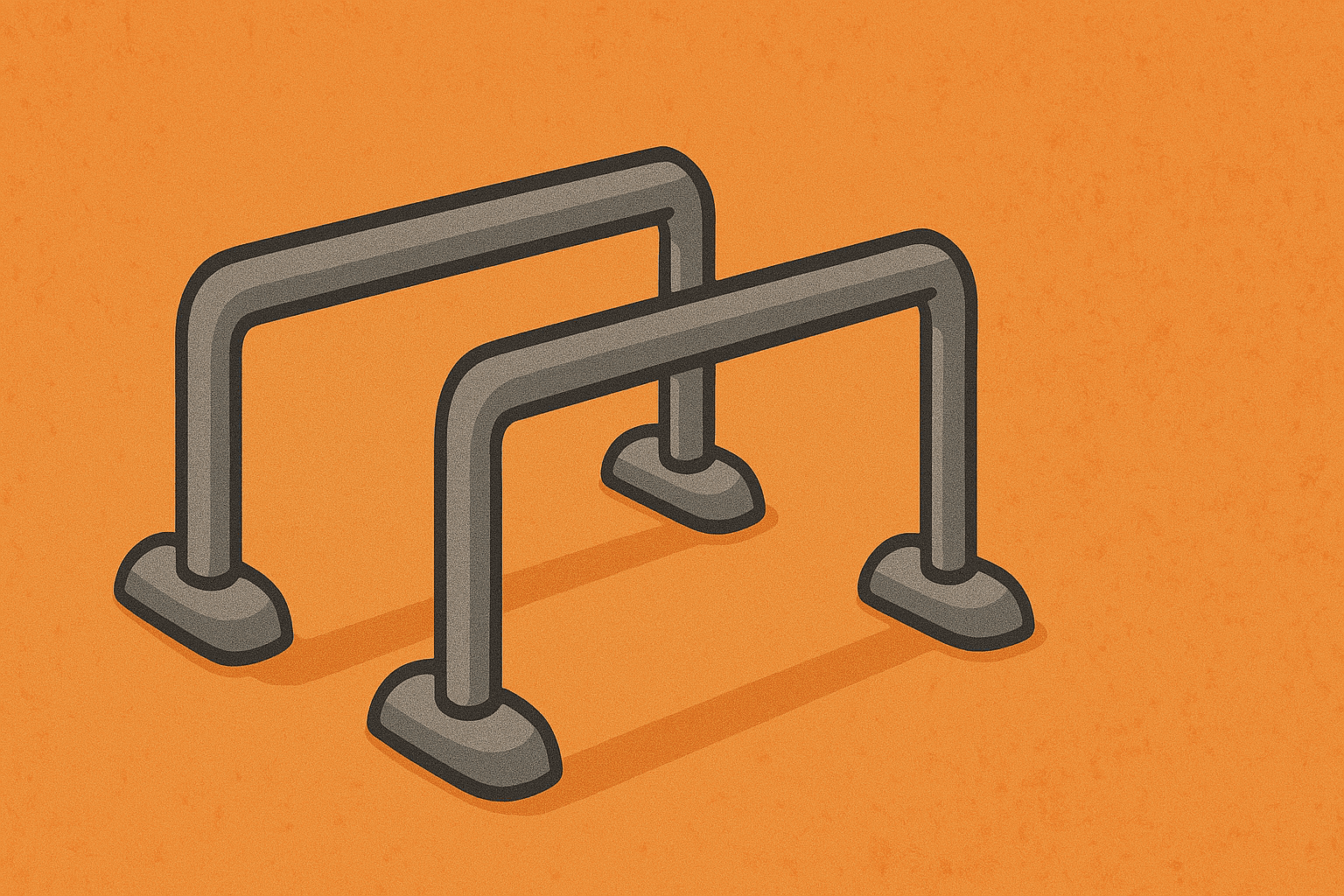
Handles keep wrists neutral and can allow a deeper range of motion. The Gornation Push Up Bars are a practical option if you want something stable that doesn’t feel flimsy. I like them most for people who train a lot of volume or who want that extra depth without wrist irritation.
If you want a broader comparison, this overview is useful: best push-up bars for calisthenics.
2) Wrist wraps (optional)
Wrist wraps can help some people feel more supported during higher volume phases, but they’re not a magic fix. If you rely on them to tolerate basic push-ups, it’s usually a sign you should scale the variation and build up gradually. If you’re curious about when they do and don’t help, this page breaks it down well: best wrist wraps for calisthenics.
How to track progress without obsessing
Use two numbers: training reps and a test set
I like tracking:
- Your main working sets, for example 3 x 8 on knee high elevation
- One test set every 2 to 4 weeks, not every workout
Testing too often turns training into performing. Train most days, test occasionally.
Signs you’re ready to progress even if reps don’t jump
Sometimes progress shows up as cleaner reps, not more reps. Good signs:
- Less shaking at the bottom
- Better depth
- Elbows stay closer without effort
- Hips stay level for the whole set
Those wins matter because they’re what allow the rep count to rise later.
Veelgestelde vragen
How to train push-ups if I can’t do a single one on the floor?
Start with an elevated push-up you can do for 8 to 10 clean reps, like wall or countertop push-ups. Train 3 times per week for 3 to 4 sets, then gradually lower the elevation. Add 2 to 3 slow negatives after your sets to build strength for the floor.
How often should I train push-ups to increase my reps?
For most beginners and intermediates, 3 sessions per week with rest days between is ideal. You build enough volume to improve, while keeping recovery and form intact. If you want extra practice, add a few easy sets on off days, staying far from failure.
Why do my elbows flare and what should I do?
Elbows usually flare when the variation is too hard or you’re rushing the reps. Scale to an easier variation, slow the lowering, and think “arrow shape” from above. A slightly narrower hand position can help, but only if your wrists feel comfortable and depth stays consistent.
Are knee push-ups good or should I avoid them?
Knee push-ups can be useful, but they often reduce full body tension and change the pattern compared to a standard push-up. I usually prefer elevated push-ups first because they keep a straighter line. If you use knee push-ups, keep shoulders to knees in one line and use full range.
Do plyometric push-ups help, and when should I add them?
Plyometric push-ups can improve power and increase muscle activation, but only after you own strict push-ups with stable form. Add them 1 to 2 times per week for low reps, like 3 to 5 sets of 3, and stop when speed drops. Quality matters more than height or claps.
If you take one thing from this guide on how to train push-ups, make it this: pick a level you can control, repeat it consistently, and progress one step at a time. Elevated variations, strict form, and a simple 3 day schedule will get you stronger faster than random max sets. Add negatives and holds to close the gap to full push-ups, then use small overload changes to push your rep count up. Keep reps clean, listen to your joints, and be patient for a few weeks. Push-ups reward steady effort.