If you want to learn how to do a handstand, the fastest path is rarely “kick up and hope.” In my experience coaching calisthenics beginners, progress comes from three boring but effective things: learning to fall safely, building the shoulder strength to actually hold your weight, and training the body awareness that keeps you stacked. In this guide, I’ll walk you through a clear step by step plan, the drills that matter most, and the common mistakes that waste weeks. You’ll also get a simple weekly routine you can repeat at home with minimal equipment.
What a good beginner handstand really is
A beginner handstand is not a perfect, straight, 30 second freestanding hold. A good beginner handstand is a position you can enter and exit safely, where your arms stay locked, your shoulders stay active, and you can make small balance corrections with your fingers instead of panicking.
I like to define early success like this: you can kick up to the wall with control, hold 20 to 40 seconds with decent form, and you can bail out on purpose. Once you own those three, freestanding becomes a skill problem, not a fear problem.
The basic shape: stack and tension
Think “stack” and “tension.” Stack means your wrists, shoulders, hips, and feet are roughly in one line. Tension means your legs are together, glutes lightly squeezed, and ribs are not flaring.
The most common issue I see is the banana shape: ribs forward, hips open, feet drifting behind you. Fixing it is less about flexibility than people think. It’s mostly about shoulder elevation and keeping your pelvis under control.
What you need before you start
You do not need fancy gear, but you do need a sensible setup. Use a clear wall space, a non slippery floor, and enough room to cartwheel out to the side.
- A wall you trust and can place your hands close to
- A yoga mat or folded towel for headstand padding (optional but helpful)
- A phone or camera to film short clips for feedback
If your wrists get cranky, it’s usually technique and volume, not “weak wrists.” We’ll cover warm up and load management below.
Step 1: Get comfortable upside down by learning how to fall
If there’s one thing I’d change about most beginner tutorials, it’s this: they start at the wall handstand, but they don’t teach you how to leave it. Fear of falling is the biggest limiter for most people, and fear makes your form worse. So we train the exit first.
The Wheel Out: your default bail
The “wheel out” is basically the second half of a cartwheel. You rotate out sideways instead of collapsing straight down. It’s simple, it’s repeatable, and it gives your brain a plan.
- Start in a low incline position with your feet on the wall and hands on the floor.
- Shift weight into one hand.
- Lift the other hand slightly.
- Turn your chest and hips to the side.
- Let the top leg come down and step out.
Practice this from low to higher positions. The rule I use is: if you can’t bail calmly from a position, you’re not ready to train balance in that position.
A simple progression that actually works
Make the wheel out a mini drill you do every session. Do it when you’re fresh, not only when you’re tired.
- Low wall lean: 5 reps each side
- Higher wall lean: 5 reps each side
- Near vertical chest to wall: 3 to 5 reps each side
- Optional: a few slow cartwheels to make the rotation feel natural
A practical tip: adding a soft surface where you land is fine, but do not place your hands on something squishy. Soft hands equals unstable wrists and more irritation.
Step 2: Build the strength to hold your bodyweight on your hands
Handstands look like balance, but beginners fail mostly because they can’t keep the shoulders working long enough. Strength here is not just “push ups strength.” It’s the ability to push tall through your shoulders while keeping elbows locked.
Wall Walks: the most useful strength drill
Wall walks are the best bang for your time because they build strength and awareness at the same time. You start in a push up position, then walk your feet up the wall while walking your hands closer in. Go only as far as you can stay controlled, then walk back down.
Form cues that matter:
- Hands about shoulder width, fingers spread
- Arms straight as early as possible
- Push tall, don’t sink into the shoulders
- Move one “step” at a time, no rushing
Programming I like for beginners: 3 sets of 3 to 6 controlled reps, resting enough to keep quality. If your last reps turn into a fight, cut the set earlier and add another set next time.
Chest to wall holds: build the line without guessing
Face the wall and walk up until you’re close enough to feel stacked. This position teaches you what “straight” feels like because the wall punishes the banana shape.
Key cues:
- Hands a short distance from the wall (start farther away if needed)
- Look at the floor between your hands, not at the wall
- Ribs down, glutes lightly on, legs together
- Use your fingertips to gently pull away from the wall
Accumulate time instead of chasing a single max hold. For example, do 5 holds of 15 to 25 seconds. That’s enough volume to improve without wrecking your wrists.
Wrist friendly options and when to use them
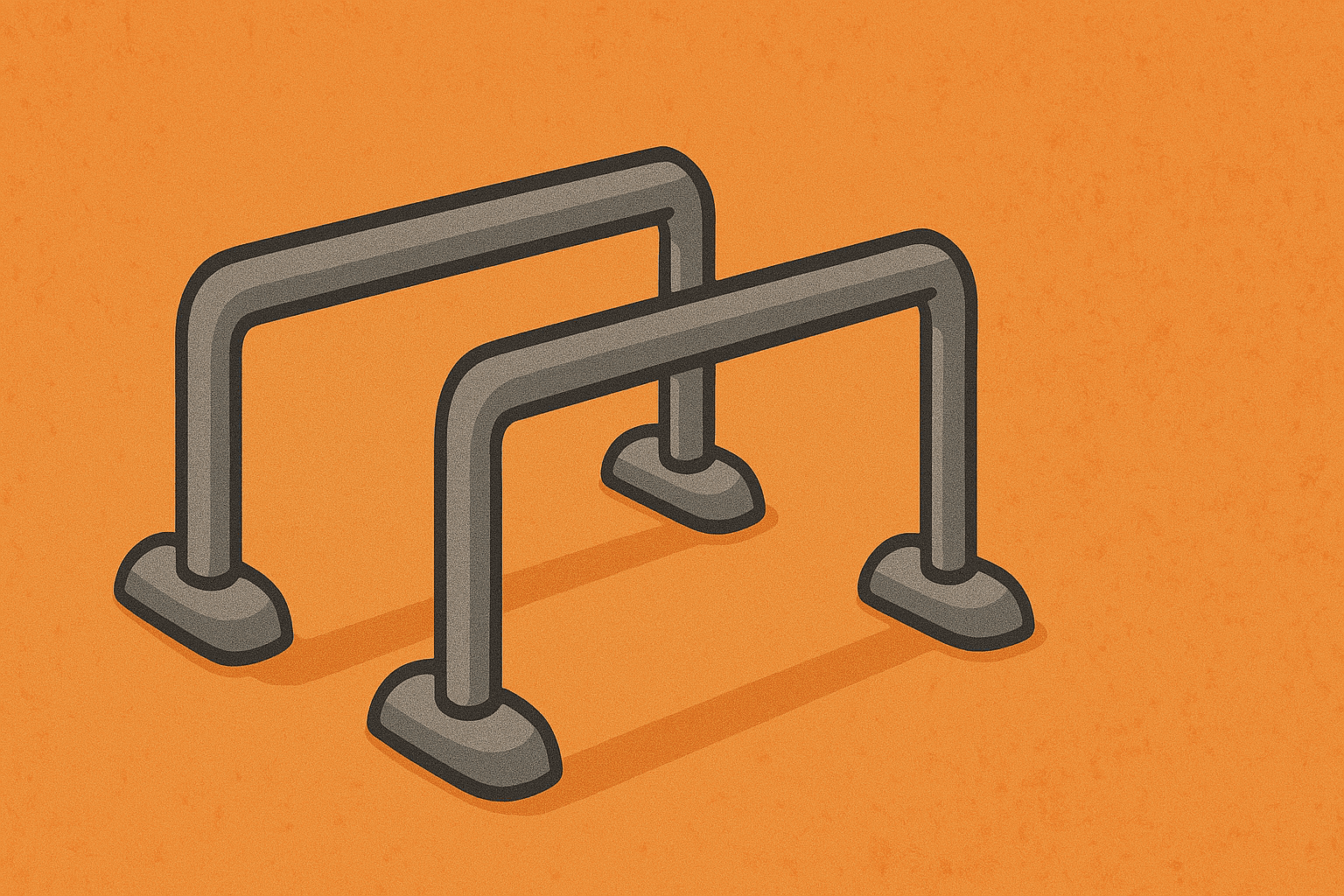
Some people can’t tolerate a lot of flat palm work early on. In that case, raising the hands slightly often helps because it reduces wrist extension. This is where I think parallettes are “worth it” for many beginners.
If you want one piece of gear, I’d choose Gornation Parallettes because they allow the same handstand patterns with less wrist stress and a more solid grip than improvised books or unstable push up handles.
If you keep training on the floor, do it smart: warm up properly, keep sessions short, and spread volume across the week.
Step 3: Develop awareness so balance becomes teachable
Strength gets you into the position. Awareness keeps you there. Awareness is your ability to feel where your hips and ribs are, whether your legs are drifting, and how to correct with hands and shoulders.
The fastest awareness builder for many beginners is the headstand. It lets you be upside down with a bigger base of support, so you can explore shapes without the same intensity in the shoulders.
Headstand progression (near a wall)
Use a stable triangle: hands and head on the floor, with the hands forming the other two points. Add padding under your head if it’s uncomfortable.
- Toe assisted tuck headstand: walk knees toward your chest until your toes start to float.
- Tuck headstand: lift feet and tuck them toward your glutes with control.
- Hip extension: open the hips until heels come above your hips.
- Full headstand: extend hips and knees to a straight line.
Go slow. If you rush the leg lift, you’ll tip and turn it into a scramble. I’d rather you hold a clean tuck for 10 seconds than wobble through a shaky “full” headstand.
Transfer awareness to the handstand
Once headstands feel calm, steal the same ideas for your wall handstand: try a tuck shape, a slight straddle, or gentle leg switches while staying tall in the shoulders. This is where you learn what changes your balance.
A simple drill I use a lot:
- Chest to wall hold for 15 to 20 seconds
- One slow leg lift away from the wall, then switch
- Rest and repeat for 3 to 5 rounds
This trains control without the chaos of repeated kick ups.
How to kick up with control (without launching yourself)
Kick ups are useful, but only after you can bail and you have a decent wall line. The mistake is treating kick ups like a power move. You want a quiet entry you can repeat.
The setup I recommend
Start in a lunge with hands placed shoulder width. One leg is your “swing” leg, the other is your “push” leg. Keep your gaze on the floor between your hands.
Cues that clean up most kick ups:
- Shift shoulders slightly over hands before you kick
- Kick to a split position first, not feet together
- Stop the kick with the back leg rather than smashing into the wall
- Keep elbows locked and shoulders pushing tall
If you keep over kicking, use the wall facing position and aim for a gentle tap, or start from a raised surface where you can place one foot up first. Less drama, more reps.
Finger pressure is your steering wheel
Balance corrections mostly come from the fingers. If you fall toward your back, press harder through fingertips to bring you back. If you fall toward your stomach, ease fingertip pressure and push tall through the shoulders.
This is why I’m not a fan of super soft surfaces under the hands. You want clear feedback from the floor.
A practical 20 to 30 minute routine (3 to 5 times per week)
Consistency beats marathon sessions. If you train handstands 3 to 5 times per week, even for 20 minutes, you’ll build the specific strength and comfort faster than doing one big session on the weekend.
Warm up (6 to 8 minutes)
Keep it short, but don’t skip it.
- 2 minutes light cardio (jumping jacks, fast walk, easy jog in place)
- 2 minutes wrist prep: circles, gentle pulses, weight shifts
- 2 to 4 minutes shoulder activation: scapular push ups, downward dog shoulder shifts
Main work (12 to 18 minutes)
- Wheel outs: 3 to 5 reps per side, starting easy and going higher
- Wall walks: 3 sets of 3 to 6 reps
- Chest to wall holds: accumulate 60 seconds total (for example 4 x 15 seconds)
- Headstand practice: 5 minutes of controlled holds and shape changes
If you only have 15 minutes, do wheel outs, one wall walk set, then chest to wall holds. Those give you the most return.
Cooldown (3 to 5 minutes)
Spend a minute on wrists, then open shoulders gently. Don’t force stretches. Your goal is to leave the session feeling better than you started, not to “win” flexibility.
Common mistakes that slow down handstand progress
Most handstand plateaus come from repeating the same low quality reps. Fixing one or two basics usually gets you moving again within a couple of sessions.
Banana back and rib flare
If your ribs stick out, your hips usually drift and your feet end up behind you. Focus on pushing tall, lightly squeezing glutes, and thinking “zipper up” through the front of your body.
I’m not obsessed with perfect hollow for everyone, but you do need enough control to avoid hanging on your lower back.
Passive shoulders
This is the silent killer. If you don’t elevate and protract slightly, the whole position feels heavy and unstable. A good cue is: push the floor away until your ears feel closer to your shoulders.
Too much volume, too soon
Wrist pain and elbow irritation usually come from doing too many kick ups and too many long holds before your tissues adapt. Keep most of your work controlled and repeatable. I like the idea of spending most time on clean drills and a smaller amount on “tests” or challenges.
Training without feedback
Film 10 seconds from the side. It’s the easiest way to see if you’re stacked. What feels straight often isn’t. One short clip per session can save you weeks.
Equipment advice (minimal, honest, and actually useful)
You can learn the handstand with no equipment. That said, two things can make training smoother: saving your wrists and improving grip confidence. I keep recommendations minimal because too much gear becomes an excuse to delay training.
When I’d use wrist wraps
If your wrists feel irritated even with a proper warm up and sensible volume, wraps can help you tolerate the early phase while you build capacity. I prefer them as support, not as a crutch. Use them for higher volume days, and still train some unwrapped time to adapt.
If you want to dive deeper into options and what to look for, this guide is helpful: best wrist wraps for calisthenics.
For a simple, solid pick, Gornation Wrist Wraps are a sensible choice. They’re straightforward, durable, and do the job without gimmicks.
When I’d use parallettes
If wrist extension is the main limiter, parallettes are a clean workaround that still builds the same shoulder patterns. They also make it easier to practice in tighter spaces because you feel more stable.
If you’re curious what features matter, check: best parallettes for calisthenics.
My honest take: if your wrists are fine, you don’t need them. If your wrists are not fine, they’re absolutely worth trying.
How long does it take to learn a handstand?
People want a timeline, but the honest answer depends on how often you practice and how clean your reps are. With 3 to 5 short sessions per week, many beginners reach a controlled wall handstand in a few weeks and start getting brief freestanding holds later. If you train once a week and only do chaotic kick ups, it can take forever.
What I’ve seen work best is focusing on accumulated hold time and repeatable entries, not “one lucky hold.” Track your total wall hold seconds per session and aim to increase gradually.
Veelgestelde vragen
What is the fastest way to learn how to do a handstand?
The fastest way to learn how to do a handstand is to train the foundations in order: bail out first, then wall strength, then awareness drills like headstands. Most people waste time by doing endless kick ups without a safe exit plan. Short sessions 3 to 5 times per week usually beat one long weekly workout.
Should I start with chest to wall or back to wall handstands?
For beginners, I strongly prefer chest to wall. It teaches a straighter line and makes it harder to fall into the banana back position. Back to wall can feel easier at first, but it often reinforces poor alignment. You can still use back to wall briefly for confidence, but build most time chest to wall.
Why do my wrists hurt when I practice handstands?
Wrist pain usually comes from sudden volume increases, poor warm up, or collapsing into the shoulders which dumps more load into the wrists. Reduce total kick ups, add wrist prep, and consider shorter holds with more sets. If needed, parallettes or supportive wrist wraps can help you keep practicing while you build tolerance.
How often should I practice handstands as a beginner?
Three to five sessions per week works well for most beginners, as long as you keep the volume controlled. Think 20 to 30 minutes with quality reps, not fatigue. The goal is frequent exposure to being upside down and building shoulder endurance. If your wrists feel beat up, keep the frequency but reduce intensity.
How do I stop over kicking and slamming into the wall?
Over kicking usually means you’re trying to “jump” into balance instead of stacking first. Start from a calm lunge, shift shoulders over hands, and aim for a split leg entry. Practice chest to wall holds and leg switches to learn control. If you still struggle, use a raised surface for one foot to reduce the kick.
If you want to learn how to do a handstand, stop treating it like a trick and start treating it like a skill with building blocks. Learn a safe wheel out, build strength with wall walks and chest to wall holds, and use headstands to develop the awareness that makes balance predictable. Keep sessions short, repeat them often, and film a little so you’re not guessing. Do that for a few weeks and you’ll feel the difference: less fear, cleaner lines, and way more control upside down.