Bodyweight dips look simple, but they’re one of those exercises where small technique details decide whether you build strong chest and triceps or annoy your shoulders. In this guide, I’ll show you exactly how to do a bodyweight dip with clean form, how deep to go, and the cues I use with beginners and intermediates. You’ll also get a practical progression if you can’t do your first rep yet, plus tips for training dips at home, common mistakes to avoid, and smart ways to progress once dips feel easy.
What a bodyweight dip is and why it’s worth learning
What the movement actually is
A bodyweight dip is a compound push exercise performed on parallel bars (or rings) where you support your full body on locked arms, lower under control by bending your elbows, and press back up. Because your torso has to stay stable while your arms move, dips train strength and coordination at the same time.
Muscles trained (and why it feels “full upper body”)
Dips primarily load your chest, triceps, and front shoulders. Your upper back helps keep the shoulders in a safe position, and your core works hard to prevent swinging and rib flare. In practice, dips often feel more “complete” than a lot of machine pressing because your body has to organize itself in space.
- Chest: more involvement when you lean slightly forward
- Triceps: more involvement when you stay more upright
- Shoulders: always involved, so technique matters
- Core: keeps your body from folding or swinging
My honest take: dips are amazing, but they’re not mandatory
I love dips for building pressing strength with minimal equipment. That said, they’re also one of the easiest movements to turn into shoulder irritation if you chase depth or bounce through reps. If dips don’t feel friendly on your shoulders right now, it’s not a character flaw. It’s usually a technique, mobility, or progression issue we can fix.
How to do a bodyweight dip with proper form
Step 1: set up on the bars
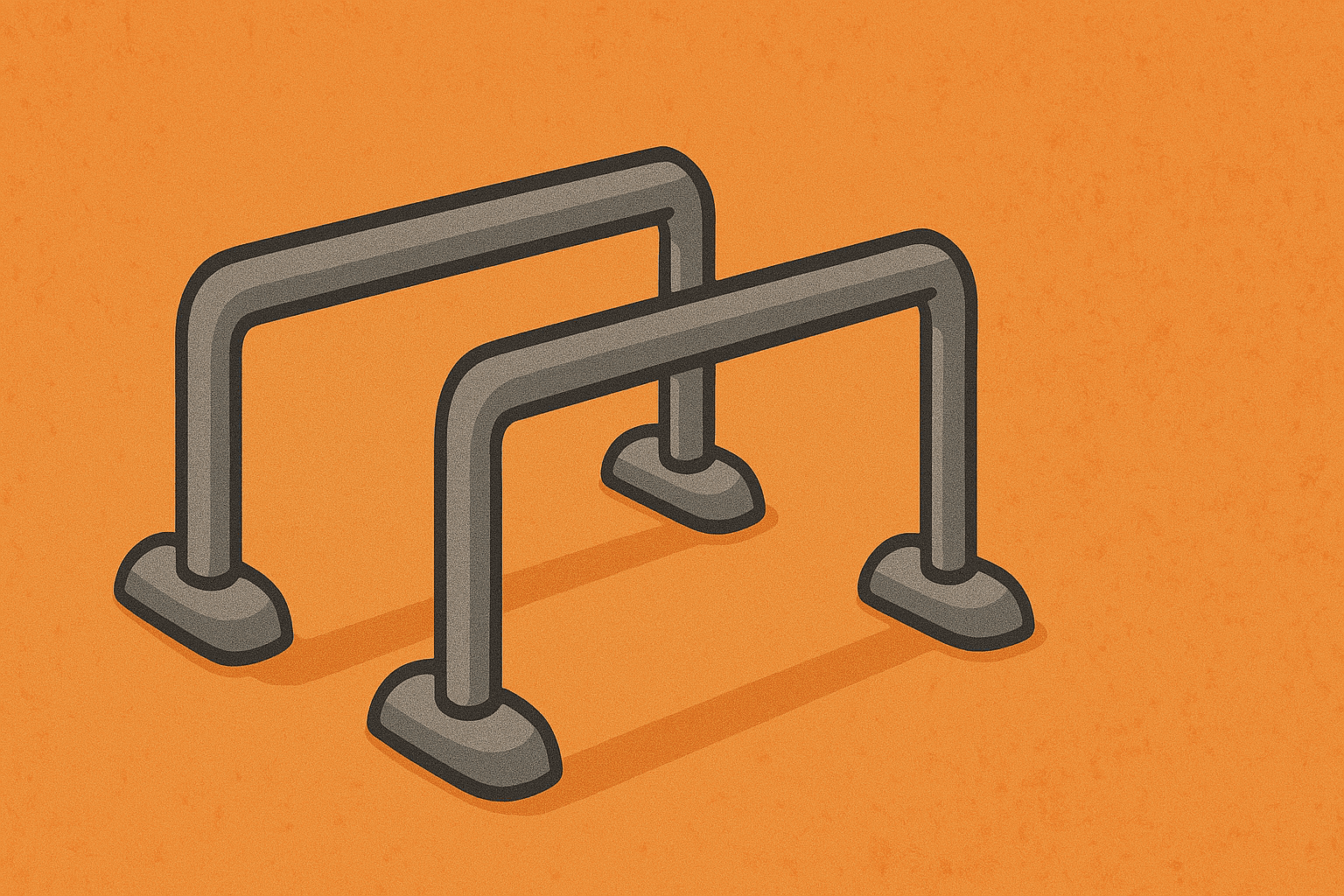
Use parallel bars that feel stable and allow a comfortable grip width around shoulder width. Jump or step into the top position and get organized before you start your first rep.
- Grip the bars firmly with your thumbs wrapped.
- Start with arms straight and your body tall.
- Bring your shoulders down and slightly back (think “away from ears”).
- Squeeze your glutes lightly, bend your knees, and keep your feet behind you for balance.
- Brace your core like you’re about to be nudged.
Step 2: the descent (controlled and shoulder friendly)
Lower yourself smoothly. Most shoulder problems in dips come from losing position here: shoulders drifting forward, elbows flaring hard, or going deeper than your current control allows.
- Inhale as you start lowering.
- Keep your chest “proud” and shoulders down.
- Let your elbows travel slightly back, roughly a 45-degree path, not straight out to the sides.
- Stop when your upper arms are about parallel to the floor (or just a little below if it feels clean).
Step 3: the press up (strong lockout without joint abuse)
Press up by driving the bars down and keeping your body stable. Exhale as you push. Aim for a solid top position with straight arms, but avoid slamming into an aggressive hyperextended lockout.
At the top, pause for half a second and reset: shoulders down, core tight, no shrugging. That little reset makes your next rep cleaner.
Depth: how low should you go?
The simplest rule that works for most people is: go down until your upper arms are parallel to the floor and you still feel in control. Some lifters can safely go a bit deeper, but forcing extra depth is rarely worth it if your shoulders feel “pinchy” or unstable. I’d rather see clean, repeatable reps than one heroic rep that costs you two weeks of discomfort.
Small tweaks that change what you feel (chest vs triceps)
Chest focused dip
If your goal is more chest involvement, use a small forward lean and allow a touch more elbow flare, but keep it controlled and never let the shoulders roll forward.
- Slight forward torso angle
- Elbows still mostly tucked, not wide
- Think “lean and press” rather than “drop and bounce”
Triceps focused dip
If you want to bias triceps, stay more upright, keep elbows closer to your sides, and focus on a strong top position.
- More vertical torso
- Elbows track back close to the body
- Strong, stable lockout position
Grip width and shoulder comfort
Most people do best around shoulder width. Too narrow can feel cramped at the bottom, and too wide often encourages flared elbows and shoulder stress. If you’re unsure, start shoulder width, film one set from the side, and adjust slightly based on what looks and feels stable.
Progression plan if you can’t do a full bodyweight dip yet
Prerequisite strength (a practical benchmark)
If you can do solid push ups with a straight body and controlled tempo, you’re on the right track. As a rough guideline, being able to do 15 to 20 clean push ups makes the first dip much more realistic, though it’s not a strict requirement.
If you also want to balance your program, pair dips with a pulling movement like pull ups. If you’re working on that too, this guide can help: https://calisthenics-equipment.com/how-to-do-a-pull-up-with-perfect-form/.
Level 1: dip holds (top support)
Start by owning the top position. It teaches shoulder stability and makes the full rep feel less scary.
- 3 to 5 sets of 10 to 20 seconds
- Shoulders down, elbows straight, body still
Level 2: negatives (slow lower only)
Negatives build strength fast because the lowering phase is easier to control than pressing up. Step into the top, then lower for 3 to 5 seconds to your target depth and step back up to reset.
- 3 to 5 sets of 3 to 6 reps
- Keep the same depth each rep
- Stop before your shoulders lose position
Level 3: band assisted dips (best all around option)
A resistance band gives the most help at the bottom, where dips are hardest. That makes it a very beginner friendly way to practice the full motion without ugly reps. If you want bands that don’t feel like a random piece of rubber from the bargain bin, the Gornation resistance bands are a solid pick because they’re consistent in tension and durable in outdoor setups too.
If you’re choosing bands and want a detailed breakdown, this page is useful: https://calisthenics-equipment.com/best-resistance-bands-for-calisthenics/.
Level 4: first full reps (singles, then small sets)
When you can do assisted dips for clean sets, start testing bodyweight dips as singles. Do 5 to 10 singles with plenty of rest, rather than forcing sets to failure. Over a few weeks, turn singles into doubles, then small sets of 3 to 5.
Common mistakes (and quick fixes)
Shoulders shrug up toward the ears
If your shoulders creep up, the whole rep gets weaker and often uncomfortable. Fix it by resetting at the top: shoulders down, chest up, ribs stacked over hips. If you can’t keep that, reduce depth or use assistance.
Elbows flare hard
Big elbow flare usually turns the bottom into a shoulder stretch you didn’t ask for. Keep elbows on a more tucked path and think about your forearms staying fairly vertical. You can still bias chest with a slight lean without going “chicken wing.”
Going too deep too soon
Depth should be earned with control. If you drop below parallel and feel a pinch, stop higher and build strength there first. Over time, your comfortable range often increases naturally.
Swinging or kipping
Swinging makes the rep look strong while actually removing the hard work. Cross your ankles, keep your glutes lightly tight, and pause briefly at the top. If you still swing, slow the tempo down.
Half reps at the top
Not finishing the press cheats your triceps and makes progress harder to track. Aim for straight arms at the top with a controlled finish, not a sloppy elbow slam.
How to do dips at home safely
The “sturdy bars” option (my recommendation)
If you train at home often, proper dip bars are worth it because stability changes everything. Wobbly setups force your shoulders to fight the equipment instead of training the movement. If you want a simple, dependable setup, Gornation dip bars are a practical choice: stable base, comfortable grip, and easy to move around a home gym.
To compare dip bar setups and what to look for, this overview helps: https://calisthenics-equipment.com/best-dip-bars-for-calisthenics/.
Chairs or countertops (use with caution)
You can do dips between two heavy chairs or on two sturdy countertops, but stability is non negotiable. If anything shifts under load, skip it. A shaky setup is where you start compensating and irritating joints.
- Test stability before you put full weight on it
- Use a spot where slipping is unlikely
- Keep reps slow and controlled
- Use feet assistance if you’re unsure
Why I’m cautious with bench dips
Bench dips put your hands behind you, which often forces the shoulder into a position that feels cramped for many people. Some athletes tolerate it, but if you feel front shoulder discomfort, don’t try to “push through.” Use parallel bars, band assisted dips, or push ups instead.
Programming: when to do dips and how many
Where dips fit in a week
Dips are a push movement. I like them 1 to 2 times per week for most people, especially if you also do other pressing like push ups or pike push ups. More isn’t always better because elbows and shoulders need time to adapt.
Beginner dip programming
Keep it simple and repeatable. Choose one variation you can do with good form.
- Top holds: 3 to 5 sets of 10 to 20 seconds
- Or negatives: 3 to 5 sets of 3 to 6 reps
- Or band assisted dips: 3 to 4 sets of 6 to 10 reps
Intermediate programming
Once you can do bodyweight dips, build volume without turning every set into a grind.
- 2 to 4 sets of 6 to 12 reps
- Leave 1 to 2 reps in reserve most sets
- Use a 2 second lower for cleaner technique
A simple full body example (twice per week)
This is not the only way to train, but it’s a clean template that keeps push and pull balanced.
- Squat pattern: bodyweight squats or split squats
- Pull: rows or pull ups progression
- Push: bodyweight dips or assisted dips
- Core: plank or hollow hold
How to progress once dips feel easy
Add reps first, then intensity
When you can hit clean sets of 12 to 15, you have options: slow tempo, pauses, harder variations, or added weight. I prefer earning a stable rep base before chasing heavier dips, because heavy sloppy dips are where elbows start complaining.
Tempo and pauses (high reward, low risk)
Two easy progressions that don’t require extra gear:
- Slow eccentrics: 3 to 5 seconds down
- Paused dips: 1 second pause near the bottom
- Cluster sets: small sets with short rests to keep quality high
Ring dips (advanced stability demand)
Ring dips are a different beast. The instability is real, and it exposes weak links fast. If you can’t do calm, controlled bar dips, don’t rush to rings. When you do try them, start with support holds and shallow reps, and build slowly.
Weighted dips (when it makes sense)
Adding load is great when bodyweight dips no longer challenge you in the 6 to 12 rep range. If you go this route, a dip belt is usually more comfortable and stable than improvising with a backpack. The Gornation dip belt is a sensible option because it keeps the weight centered and doesn’t dig in as much as cheaper, stiff belts.
Shoulder and elbow comfort: keep dips sustainable
Warm up quickly but intentionally
You don’t need a 20 minute ritual, but you do need to prepare the joints. Before dips, I like a few minutes of easy pushing and shoulder circles, then a couple of light sets of support holds or assisted reps to groove the pattern.
Pain rules I actually follow
Discomfort from effort is normal. Sharp pain, pinching in the front of the shoulder, or lingering joint ache is not. If something feels off, reduce depth, add assistance, slow down, and clean up the top position. Most issues disappear when the rep stops being rushed and uncontrolled.
Veelgestelde vragen
How to do a bodyweight dip without hurting my shoulders?
Start with a stable top position: shoulders down and slightly back, chest up, and core tight. Lower under control and stop around upper arms parallel to the floor. Avoid bouncing and avoid forcing extra depth. If you still feel a pinch, use band assistance and build strength gradually.
How deep should I go when I learn how to do a bodyweight dip?
For most beginners, going to about parallel is the sweet spot: enough range to build strength without turning the bottom into a risky stretch. If deeper feels smooth and you keep shoulder position, you can explore a little lower. But depth should never come at the cost of control.
What if I can’t do a single rep yet, how to do a bodyweight dip then?
Use a progression: top holds, slow negatives, then band assisted dips. This lets you practice the real movement while reducing the load. Test bodyweight singles once assisted reps look clean. The key is consistency, not max effort attempts every session.
Are dips better than bench press for chest growth?
Dips can be excellent for chest and triceps because you’re moving and stabilizing your whole body. Bench press is also effective and often easier to load progressively. I see them as complementary. If dips feel good on your shoulders, they’re absolutely worth using as a main push exercise.
How many times per week should I do bodyweight dips?
One to two sessions per week works well for most people, especially if you also do push ups or overhead pressing. Start with 2 to 4 sets and keep a rep or two in reserve. If elbows or shoulders feel cranky, reduce volume, slow the tempo, and focus on cleaner reps.
If you take one thing from this guide, let it be this: a great bodyweight dip is built on control, not on chasing depth or speed. Set your shoulders, lower to a consistent depth you can own, and press up without swinging. If you’re not there yet, holds, negatives, and band assisted dips will get you to your first clean rep faster than random attempts. Build reps first, then progress with tempo, pauses, and only then consider adding weight. Do that, and dips become one of the most reliable upper body builders in calisthenics.